

CSX Lawsuit Settlements
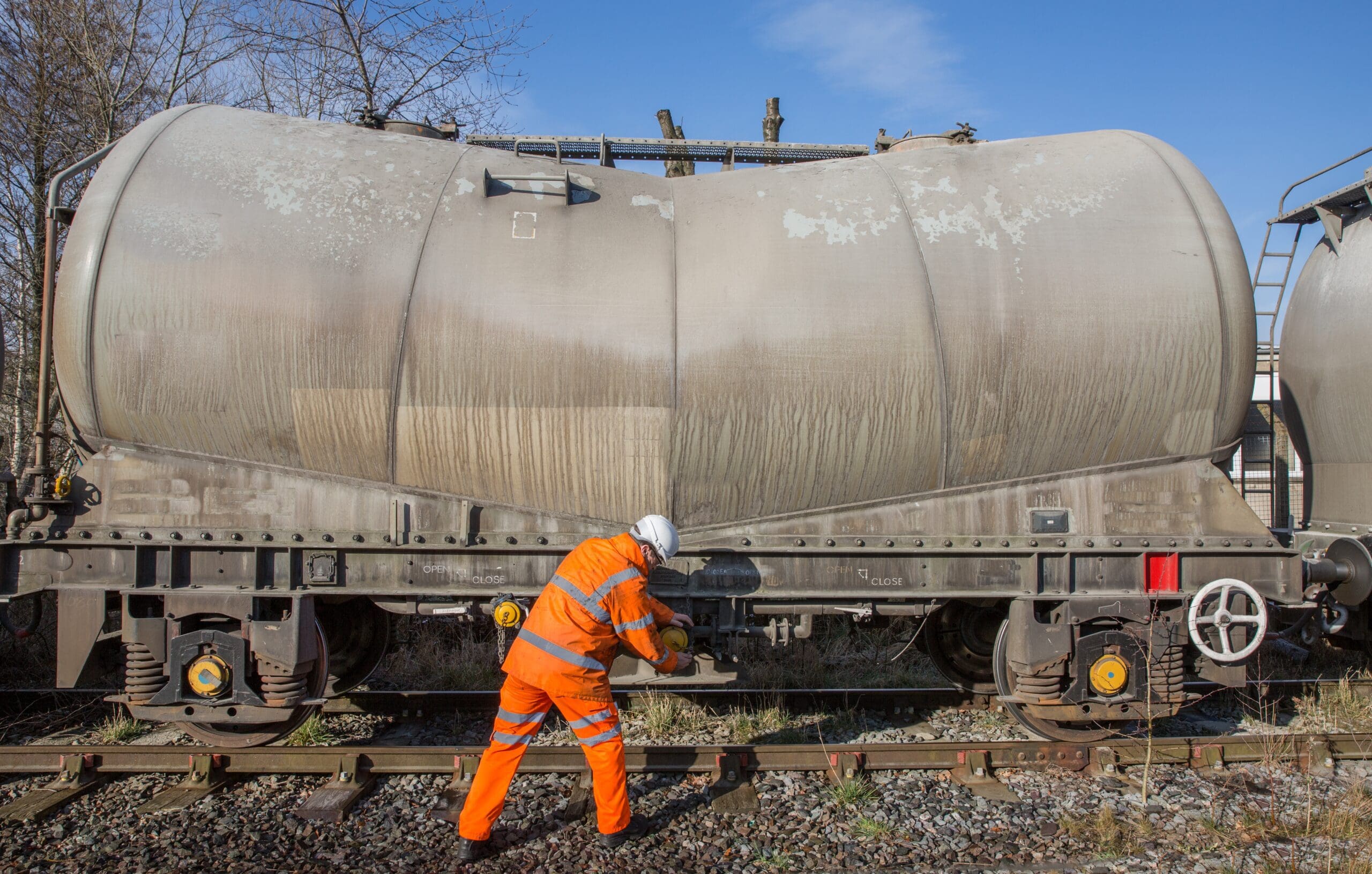
A Csx lawsuit settlement is a result of negotiations between the plaintiff and the employer. These agreements often involve compensation for damages or injuries that result from the actions of the company.
It is essential to talk with a personal injury lawyer should you have a case. These cases are some of the most frequent which is why it is essential to find an attorney who can take care of your case.
1. Damages
You may be eligible to receive monetary compensation if you've been injured by negligence of a Csx. A settlement in a lawsuit against a csx can help you and your family recover some or all of the losses. In the event that you're seeking compensation for an injury to your body or mental trauma, a skilled personal injury lawyer can help you achieve what you are entitled to.
A csx case can result in substantial damages. One instance is the verdict of $2.5 billion in punitive damages in a case that involved the blaze of a train that killed several people in New Orleans. CSX Transportation has been ordered to pay the sum in accordance with an agreement to settle all claims against a group of plaintiffs who sued the company over injuries resulting from the incident.
Another example of a large award in a CSX lawsuit is the recent jury verdict to award $11.2million in damages for wrongful death for the family of a Florida woman killed in a train crash. The jury also found CSX 35% liable.
This was a significant decision due to a variety reasons. The jury concluded that CSX failed to follow the state and federal regulations and that the company failed to properly supervise its workers.
Additionally, the jury held that the company was in violation of federal and state laws relating to environmental pollution. They also concluded that CSX failed to provide adequate training to its employees and that the railroad was not properly operated by the company.
The jury also awarded damages for pain, suffering, and other damages. These awards were based on the plaintiff's mental, emotional and physical pain she endured as a result of the accident.
The jury also found CSX to have been negligent in its handling of the accident and ordered it pay $2.5 billion in punitive damages. Despite these findings, CSX has filed an appeal and plans to take the case to the United States Supreme Court should it become necessary. Regardless the outcome, the company will continue to do its best to prevent future incidents and ensure that all of its employees are fully protected from injuries that result from its negligence.
2. Attorney's Fees
Attorney's fees are one of the most important considerations in any legal proceeding. There are, however, a number of ways that attorneys can help save your money without compromising the quality of your representation.
The most obvious and most commonly used method is to work on a contingency basis. This allows attorneys to handle cases more fairly and reduces costs for all parties. This means that you will have the most competent lawyers working on your case.
It is not uncommon to find an expense for contingency in the form of a percentage of your recovery. This is typically between 30-40 percent, however it will vary based on the circumstances.
There are several types of contingency fee schemes, some of which are more popular than other. For example, a law firm which represents you in a car accident may be paid in advance when they prevail in your case.
You will likely pay a lump sum of money if your lawyer decides to settle your Csx case. There are Railroad Cancer Settlement Amounts that affect the amount you pay in settlement. These include your legal background, the amount your damages, and your capacity to negotiate a fair settlement. Your budget is also crucial. If Railroad Cancer Settlements are a high net worth individual you might want to set aside funds specifically for legal expenses. In addition, you need to ensure that your attorney is educated on the ins and outs of negotiating a settlement so that they don't waste your money.
3. Settlement Date
The CSX settlement date for a class action lawsuit is a critical aspect in determining whether not a plaintiff's claim will be successful. This is because it determines the time at which the settlement is ratified by both federal and state courts, and when class members may object to the agreement or claim damages under the terms.
The statute of limitations for claims under state law is two years from the date the injury occurs. This is known as the "injury discovery rule." The injured party must file a lawsuit within two years after the incident or the case will be deemed to be time-barred.
A RICO conspiracy claim is subject to a four-year standard statute of limitations as per 18 U.S.C. SS 1962(d). To prove that the RICO conspiracy claim is barred in the first place, the plaintiff must demonstrate a pattern or racketeering activities.
Therefore, the foregoing analysis of the statute of limitations applies to Count 2 (civil RICO conspiracy). Since eight of the nine lawsuits relied on by CSX to prove its state claims were filed at least two years prior to when CSX filed its amended complaint in this case, reliance on those suits has a time limit.
To prevail on the RICO conspiracy claim, a plaintiff has to prove that the act behind racketeering is part of a scheme to defraud public or impede or hinder the operation of a legitimate business interest. A plaintiff must also show that the racketeering that prompted the claim had a significant impact on the public.
CSX's RICO conspiracy case is a flop for this reason. The Court has ruled that a civil RICO conspiracy claim must be substantiated not just by one racketeering crime, but a pattern. Since CSX has failed to meet this requirement and the Court finds that CSX's count 2 (civil RICO conspiracy) is pre-mature under the "catch-all" statute of limitations in West Virginia Code SS 55-2-12.
The settlement also requires CSX to pay a penalty of $15,000 to MDE and to fund an energy-efficient, community-led rehabilitation of an empty building in Curtis Bay for use as an environmental education, research and training center. CSX will also have to make improvements to its Baltimore facility to increase security and prevent further accidents. Additionally, Railroad Cancer Settlement Amounts must provide a $100,000 check to a local non-profit to help pay for an environmental project in Curtis Bay.
4. Representation
We represent CSX Transportation in a consolidated group of class actions filed by purchasers of rail freight transportation services. Plaintiffs claim that CSX along with three other major U.S. freight railways conspired to fix the price of fuel surcharges in violation of Section 1 of the Sherman Act.
The lawsuit alleged that CSX violated federal and state law by engaging in a conspiracy to systematically fix the fuel surcharge price, as well as by knowing and deliberately defrauding consumers of its freight transportation services. The plaintiffs also claimed that CSX's fuel surcharge fixing scheme led to their injuries and damages.
CSX requested dismissal of the suit, arguing the plaintiffs' claims were barred under the rule of accrual for injury. Particularly, the company argued that plaintiffs weren't entitled to claim compensation for the period during which she was able to reasonably have discovered her injuries before the statute of limitations started to expire. Csx Lawsuit Settlements ruled against CSX's motion and held that the plaintiffs' evidence was sufficient evidence to prove that they should have known about her injuries prior to the statute of limitations expiring.
On appeal, CSX raised several issues, including the following:
It first argued that the trial court erred in not allowing its Noerr Pennington defense, which required that it present no new evidence. In an appeal of the jury's verdict the court concluded that CSX's questions and arguments concerning whether a reading of a B was a sign of asbestosis and whether an asbestosis diagnosis was ever obtained . This confused the jury and prejudiced it.
Second, it argues that the trial court erred in permitting a claimant to bring a medical opinion from a judge who was critical of the treatment of a doctor to the plaintiff. In particular, CSX argued that the expert witness for the plaintiff should have been allowed to use this opinion, but the court decided that the opinion was not relevant and that it should be barred under Federal Rule of Evidence 403.
Thirdly, it claims the trial court abused their discretion by admitting the csx accident reconstruction footage. It shows that the vehicle stopped for only 48 seconds, however, the victim claimed that she waited for ten seconds. In addition, it argues that the trial judge lacked authority to permit the plaintiff to present an animation of the accident because it was not able to fairly and accurately convey the accident as well as the scene of the accident.